About Bandsaw Blades For Wood Working
Color: metallic
Material: Bimetal or high carbon
Size : Available in a variety of sizes
Usage/Application: Wood working
Finish: metallic natural
Tensile Strength: varies with type and model
Grade: Industrial wood working
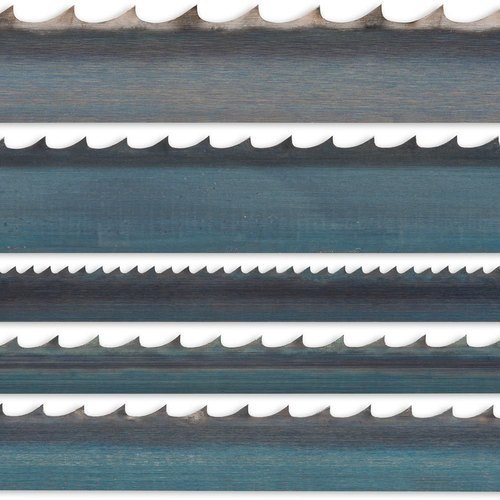
Precision and Versatility for Every Woodworking NeedThese bandsaw blades cater to a broad spectrum of woodworking operations, from carpentry to furniture manufacturing. With customizable blade sizes and tooth configurations, they enable consistent performance on various wood types. Their hardened, precision-ground teeth ensure sharp, high-speed cutting with minimal wood splintering, while their flexible design allows for both manual and machine processing.
Resharpenable Design and Long-Term ReliabilityEngineered with longevity in mind, each blade features resharpenable teeth and a robust high-carbon steel body. This allows usersmanufacturers, workshops, or wholesalersto extend blade life and maintain peak performance. Whether for industrial bulk usage or individual craftsmanship, these blades deliver enduring cutting capacity and superior results.
Bright Polished Finish and Custom FitEvery blade comes with a bright polished finish, offering corrosion resistance plus enhanced visual quality. Available in coiled or welded loop packaging, the blades are tailored to fit standard bandsaw machines and can be customized for specific project requirements by adjusting length, width, or thickness.
FAQs of Bandsaw Blades For Wood Working:
Q: How do I select the appropriate tooth configuration for my woodworking project?
A: Choose regular, skip, or hook tooth configurations based on your cutting needs: regular teeth are ideal for smooth cuts, skip teeth handle softer woods and reduce clogging, while hook teeth are best for faster, aggressive cutting in dense or thick wood.
Q: What does the tooth pitch range of 3 TPI to 24 TPI mean and how does it affect cutting?
A: Tooth pitch (TPI) refers to the number of teeth per inch; lower TPI blades (36) cut faster and clear larger chips but leave rougher finishes, whereas higher TPI blades (1024) provide finer, smoother cuts and are better suited for thinner or finish work.
Q: When should I resharpen the bandsaw blade, and how is it done?
A: Resharpen your blade whenever you notice decreased cutting performance or rougher finishes. This can be done using blade-specific files or sharpening machines, ensuring the precision-ground teeth regain their edge for extended use.
Q: Where can these bandsaw blades be used for maximum efficiency?
A: They are suitable for carpentry workshops, furniture manufacturing units, and any industrial or manual wood cutting setting where high accuracy, speed, and durability are required.
Q: What is the process for customizing the blade dimensions to fit my bandsaw machine?
A: You can specify the required blade length (typically 72 to 150 inches), width (from 1/4" to 1-1/4"), and thickness (0.014" to 0.050") based on your bandsaw model and application. Suppliers and manufacturers provide customization to ensure the perfect fit and optimal cutting performance.
Q: How does the precision ground, hardened tooth edge benefit my woodcutting operations?
A: Precision ground, hardened teeth deliver sharper cuts and higher resistance to wear, resulting in smoother finishes, consistent high-speed performance, and longer blade life, minimizing downtime for resharpening or replacement.
Q: What are the advantages of a bright polished finish on these bandsaw blades?
A: The bright polished finish enhances corrosion resistance, improves blade lifespan, and presents a professional appearance, making maintenance easier and adding value for both industrial and workshop users.



 Send Inquiry


 Send Inquiry